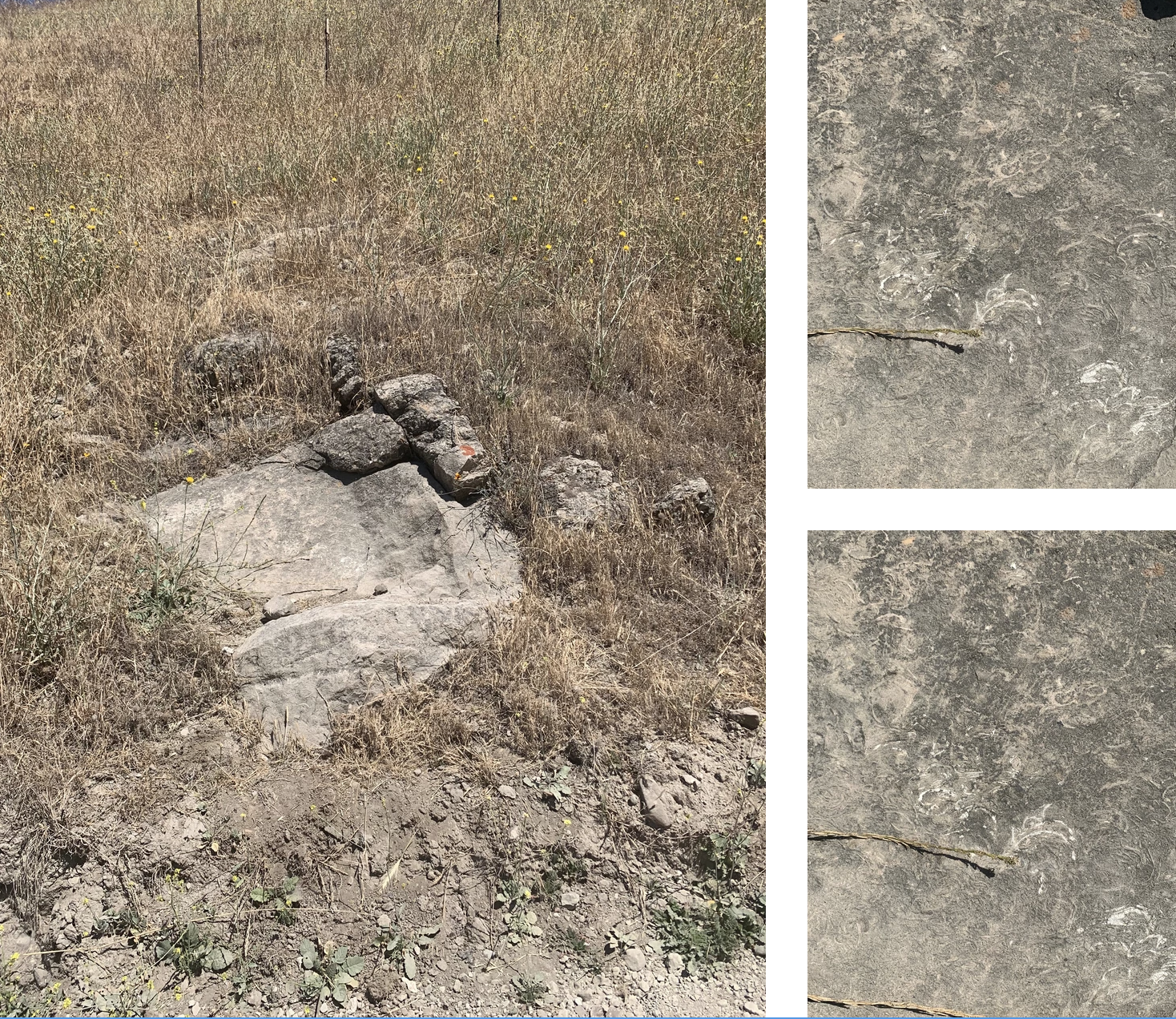
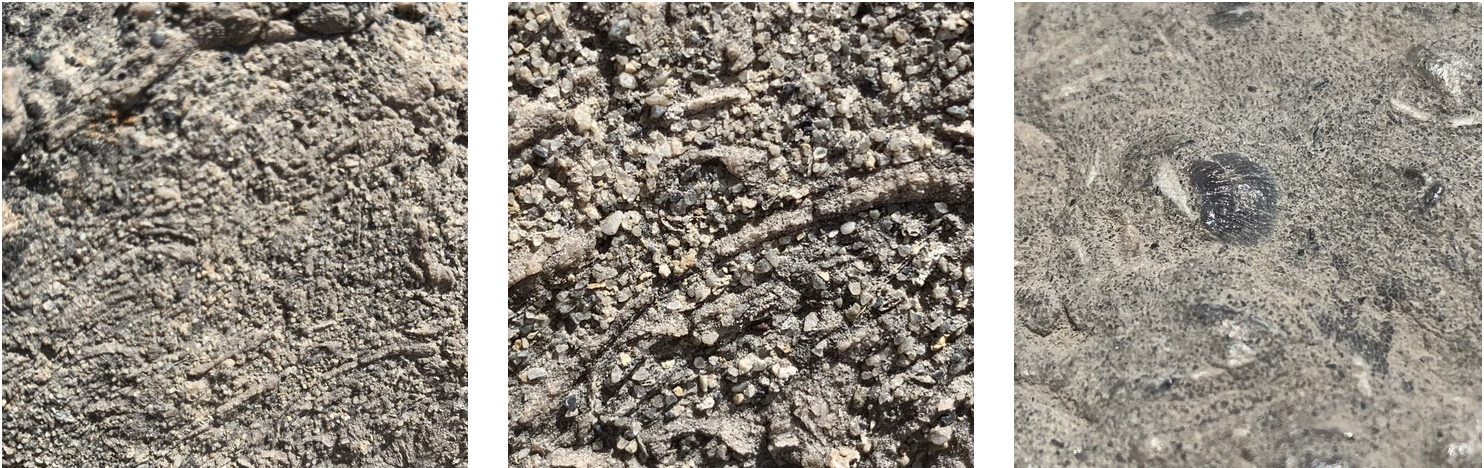
This image shows evidence of a type of physical weathering using water called freeze-thaw weathering. As the water in the cracks freezes and expands in cold weather, the crack in the rock is expanded and lengthened.At an exposed rock, we can observe fossils of the shells of ancient shallow marine organisms embedded in a sedimentary rock. The existence of shells show that this rock on the side of Mission Peak used to be submerged underwater in a shallow marine environment. Since the shells are made up of calcite, which will dissolve in deep marine environments, these organisms must have been buried by sediments close to shore.These images are examples of fossils buried in sandstone. We are able to see the texture and components of the sandstone as well as some of the fossils in it from these images.
How Do I Know?:
The sediments of sandstone are, as the name suggests, sand-sized particles, specifically with diameter of 1/16 of a millimeter to 2 millimeters. Therefore, we are able to see the grains will our unaided eyes. In addition, if we look closer, we can see that there are transparent sediments, or silicates, in the sandstone. Finally, if we rub the surface of the sandstone hard, we may be able to feel some of the removed sand-sized sediments if we rub our fingers together.

 Bay Area Earth Science